Short answer
- Compare one cold mains-fed tap with another outlet and record whether the problem affects cold water, hot water or both.
- Check Scottish Water information and ask a neighbour before assuming the fault is inside one property.
- Confirm a familiar internal stop valve is fully open only if it moves freely; do not force or adjust unfamiliar valves.
- Treat a single fixture, hot-only issue, whole-property drop and shared-flat problem differently; do not fit a pump or alter controls as a test.
Low pressure and low flow are not always the same
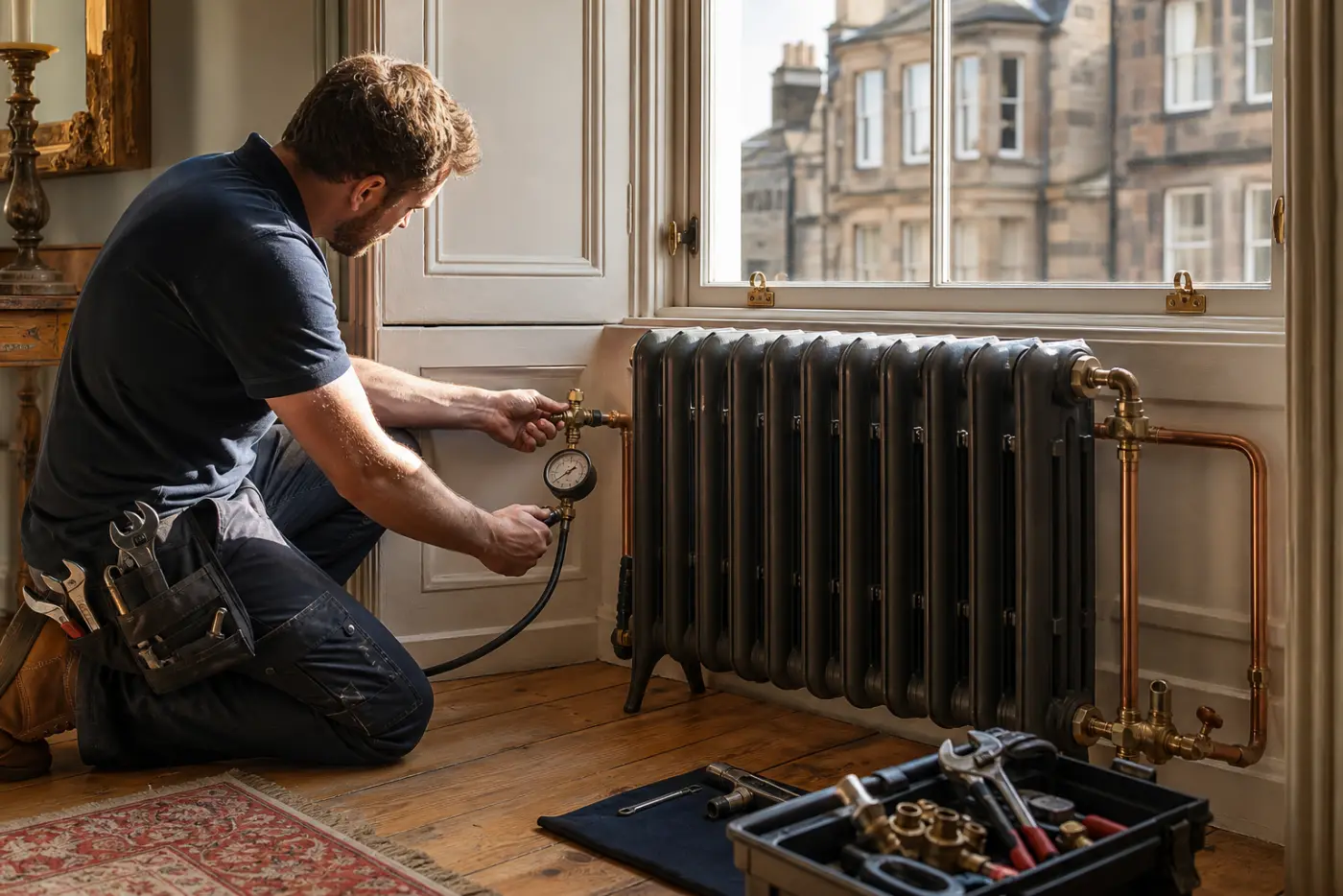
Pressure is force in the supply; flow is the amount delivered over time. A restricted outlet can feel like low pressure even when the incoming supply is normal. Run one outlet at a time and note whether the stream stays weak, falls after starting, pulses or changes when another tap opens. Do not remove cartridges, shower valves, pipework or boiler covers; the pattern is more useful than an attempted repair.
Which outlets are affected can reveal the likely scope
Compare the kitchen cold tap, another cold outlet and one hot outlet separately. Note the floor level and whether flow changes at busy times. One slow fixture suggests a local issue; several cold and hot outlets point toward the incoming supply, stop valve, shared pipe or broader restriction. Normal cold flow with weak hot flow shifts attention to the hot-water side, whose boiler or cylinder controls should not be adjusted as a test.
- One fixture only: record its make, type and whether nearby outlets are normal.
- Hot water only: note the hot-water system type if already known and any displayed warning code.
- Every outlet: note when the change began and whether a neighbour is affected.
- Upper floors or peak times: record floor level, shared-supply information and the times the flow changes.
Rule out a wider Scottish Water issue
Ask a neighbour whether their water changed at the same time, particularly after a sudden drop, and check Scottish Water's current information for known work or interruptions. Record the time, postcode, affected properties and whether flow is reduced or absent. If several properties changed together, contact Scottish Water rather than treating one fixture. Follow its current water-quality advice if the returning supply is discoloured or unusual.
Make only safe internal observations
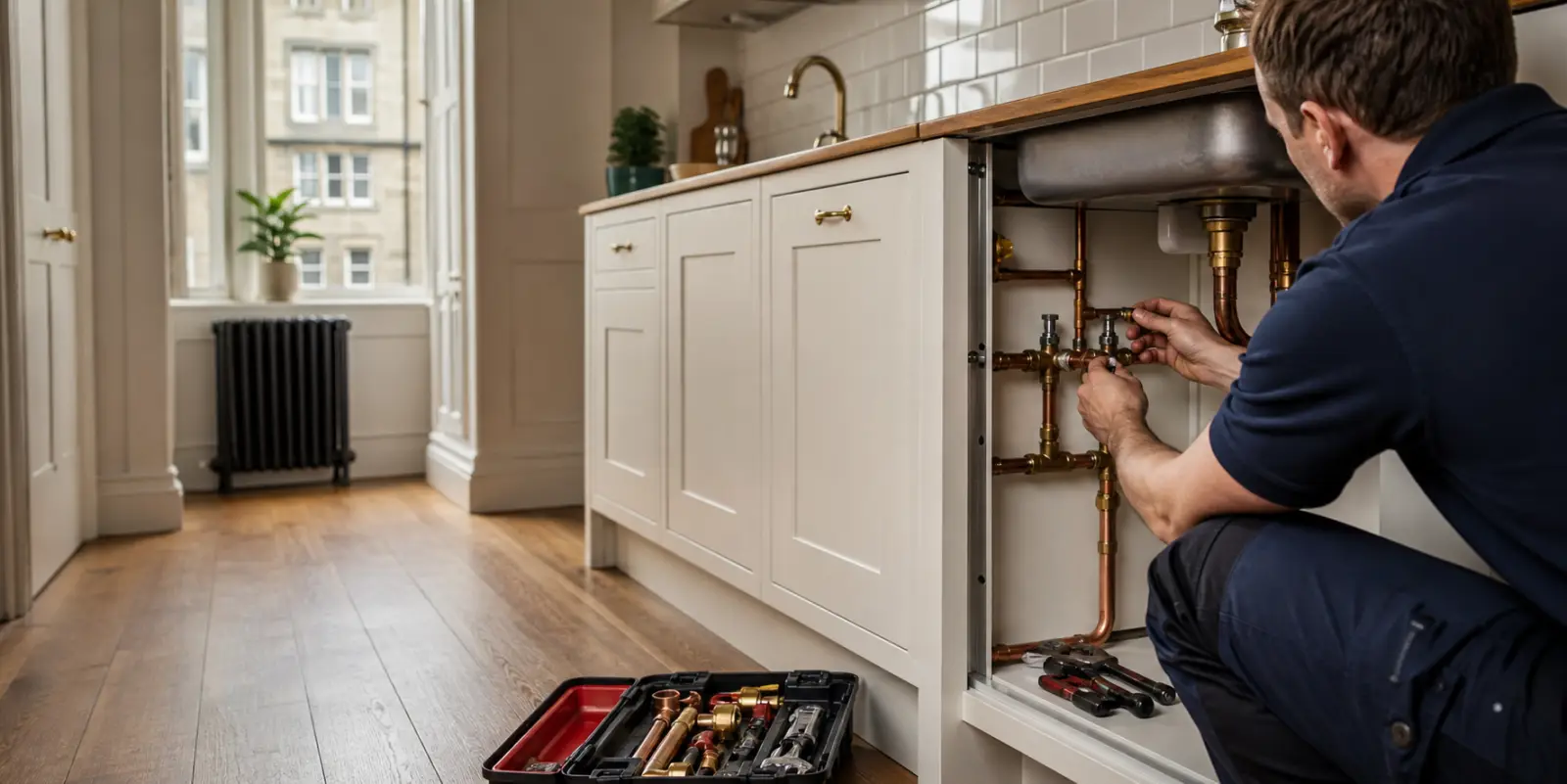
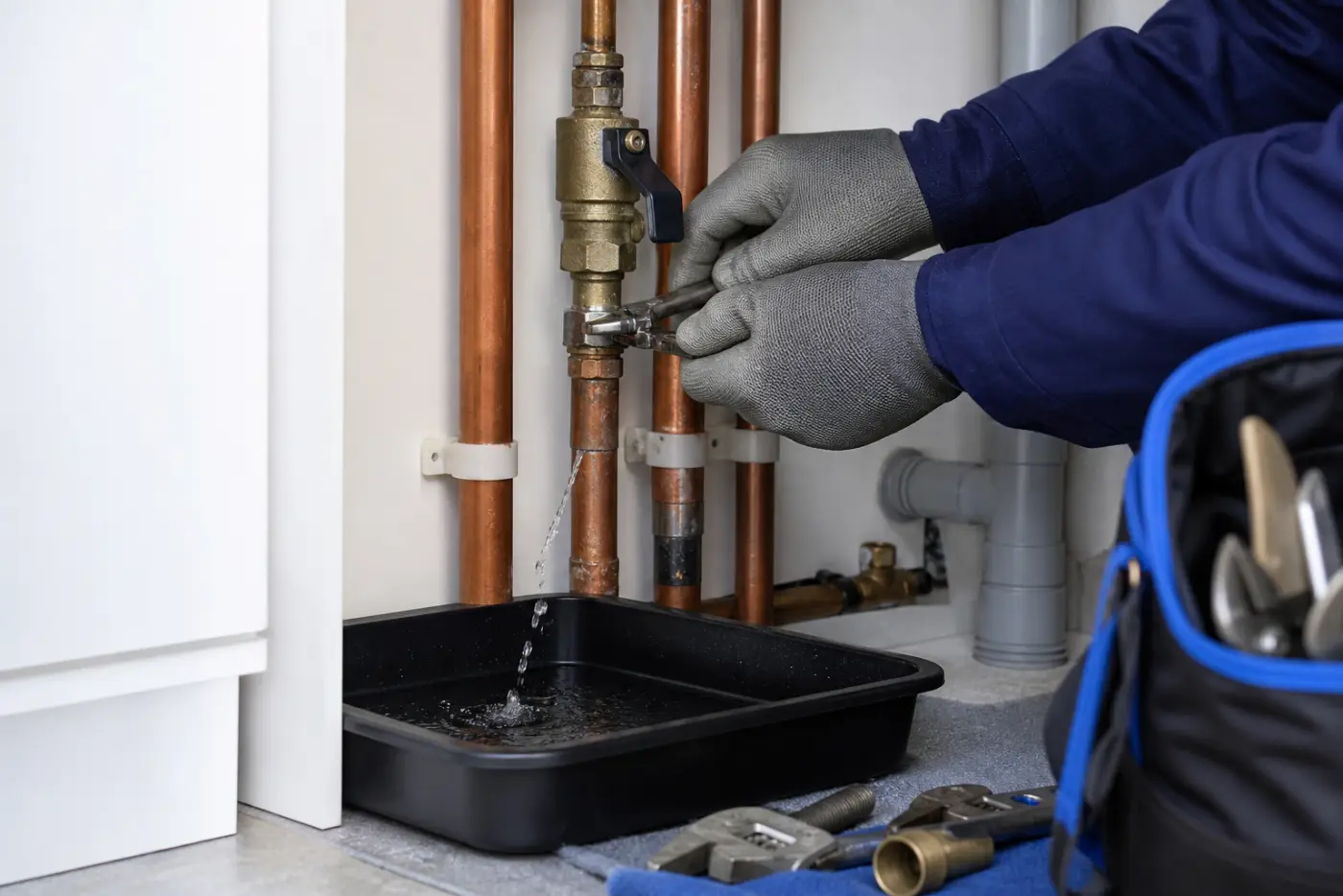
Scottish Water identifies a partly closed internal stop valve and leaks as possible restrictions. If the valve is familiar, dry and free-moving, confirm it was not left partly closed; it generally opens anticlockwise. Never force it, alter a regulator or operate a communal valve without agreement. Listen for hissing and look for spreading damp or unexpected water without opening floors or walls. Follow the leak guidance if active water is found.
Choose the right next route
Contact Scottish Water when multiple properties are affected, supply has stopped or a network-side problem is suspected. Use a plumbing enquiry for a faulty fixture, an internal restriction, a stop valve that will not operate, a leak, or a property-wide issue after wider checks. Include the start date, outlets, cold-versus-hot pattern, floor, neighbour result, valve position, leak signs and recent work. Do not choose a booster pump before the cause and Water Byelaw requirements are assessed.
Useful Scottish references
- Scottish Water: water pressure Official overview and route to Scottish Water's pressure factsheet.
- Scottish Water: your water pressure explained Detailed guidance on stop valves, leaks, shared supplies, flats and responsibility.
- Scottish Water: I think I have a leak Signs of supply-pipe leakage and the official reporting route.