Short answer
- Keep away from water that may be in contact with electricity, and never reach through standing water to operate a switch or valve.
- Stop using the affected tap, toilet, shower or appliance and close only a familiar, accessible isolation valve that moves without force.
- Record where water first appears, what makes it start, whether isolation worked and whether neighbouring rooms or the property below are affected.
First decide whether it is safe to approach
Do not step into pooled water to reach a valve, socket, appliance or fusebox. Keep everyone away if water is entering electrical fittings or the consumer unit; switch off at the consumer unit only when it is safely reachable from a dry position. Stay out from beneath a sagging ceiling, and avoid contact with foul water, sewage or an unknown liquid.
- Water touching electrics, visible arcing, burning smells or a wet consumer unit: keep clear and seek qualified electrical help.
- Rapidly increasing water, a failed local valve or water crossing rooms: use the burst-pipe actions instead.
- A stable drip into an accessible dry area: continue only with simple isolation and containment.
Stop using the fixture and isolate only what you recognise
Stop using the tap, shower, toilet or appliance associated with the leak. If a familiar local valve is dry, accessible and moves normally, close it gently; never force a seized valve with tools. If water continues, the source is uncertain or the rate rises, close the internal main stop valve when safe. Scottish Water says it is commonly beneath a kitchen or utility sink, in a garage or where the mains enters the home.
Contain the water without taking the plumbing apart
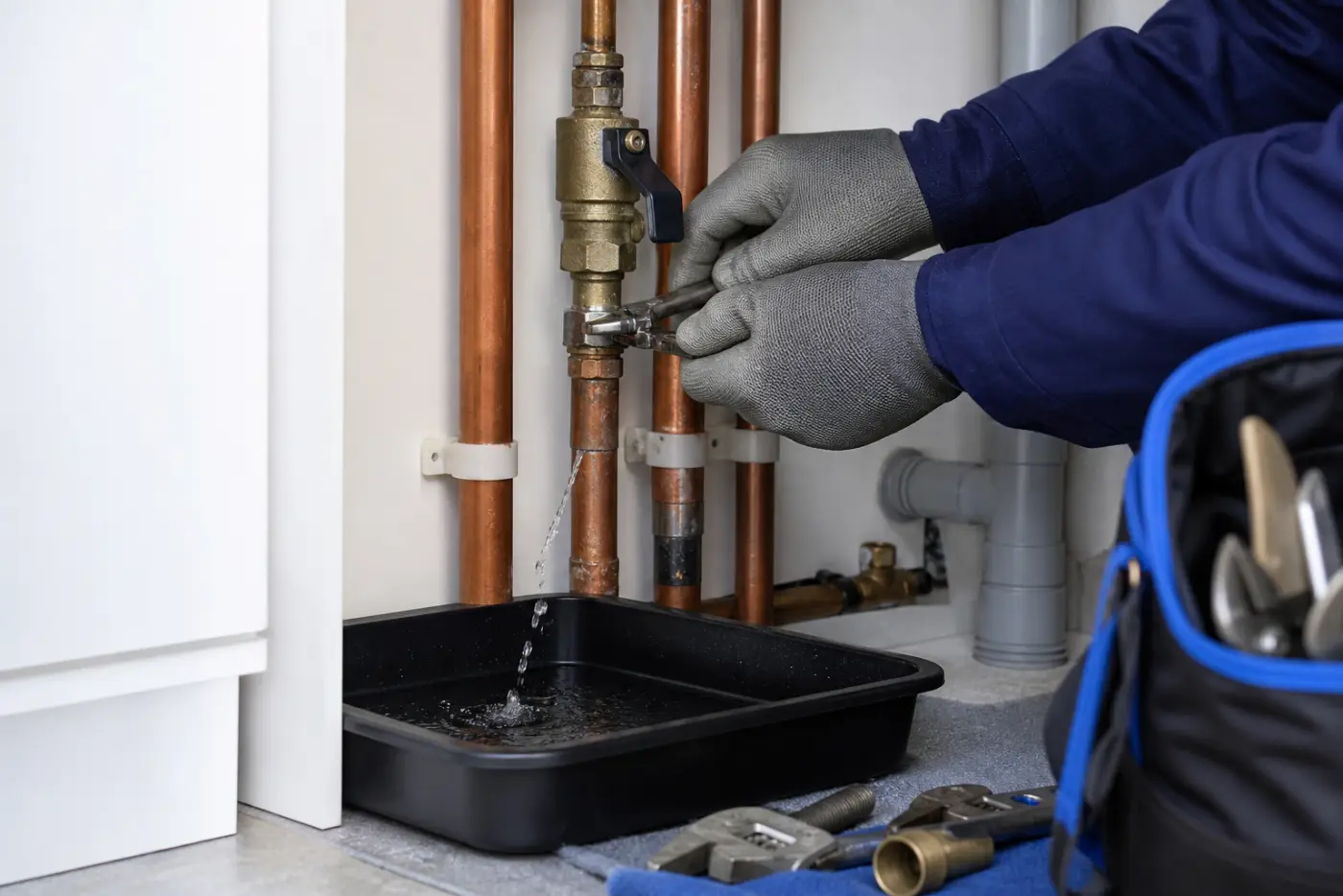
Place a wide, stable bowl or bucket below the drip and use towels to catch splashes. Move possessions and portable electrical items only from a dry approach, and alert the room or property below. Do not loosen connectors, remove a trap, seal a wet pressurised joint or treat tape as a repair. Empty the container safely and keep the fixture out of use even if the drip slows.
- Use one stable container rather than balancing several small ones beneath pipework.
- Keep children and pets away from the wet area and mark a slippery floor.
- Do not run a washing machine, dishwasher or shower to test whether the leak has stopped.
Work out what triggers the leak
Without repeatedly recreating the leak, note whether water continues with fixtures off or appears when a tap runs, a basin drains, a toilet flushes or an appliance operates. Record the highest visible wet point because water may travel before dripping. Do not touch or taste the water, lift flooring, open a ceiling, remove fixed panels or reach behind appliances.
Useful details for a repair request
Write down the room, fixture, highest visible wet point, time noticed and current leak rate. Add what triggered it, which valve was closed, whether the main water remains on, and whether isolation worked. For a flat, include the floor, shared-stair access, factor or landlord route and any effect below. Note visible pipe or appliance details without moving equipment, and mention electrical proximity first.
Keep the temporary arrangement stable
Leave the fixture and isolated supply off, recheck the container safely and tell other occupants what not to use. A leak may return when a toilet refills, another fixture drains or pressure changes. Request plumbing help for internal pipework; use Scottish Water's responsibility guidance where a supply pipe, shared arrangement or network-side leak may be involved.
Useful Scottish references
- Scottish Water: who fixes leaks and leakage Explains household and Scottish Water pipework responsibilities.
- Scottish Water: frozen or burst pipe advice Official stop-valve, heating and electrical precautions for a burst pipe.
- Electrical Safety First: electrical safety after water damage Safety boundaries for consumer units, wiring and wet electrical equipment.