Short answer
- Close the internal main stop valve when safe; it commonly closes clockwise.
- Switch off electricity only from a dry, safe position and keep clear of wet electrics.
- Switch off heat sources and drain remaining water, following the different precautions for frozen pipes.
- Alert neighbours or the factor where a shared building is affected, and keep heating off until the system is repaired and refilled.
Keep clear of electricity and falling material
Water can travel through floors and into lights, sockets or wiring. Keep everyone away from pooled water, wet electrical fittings and sagging ceilings. Do not touch a wet consumer unit or stand in water to reach it. Switch off electricity at the mains only from a dry, clearly safe position; otherwise keep clear and seek a qualified electrician. Call emergency services for an immediate threat to life or fire.
Shut the incoming water off
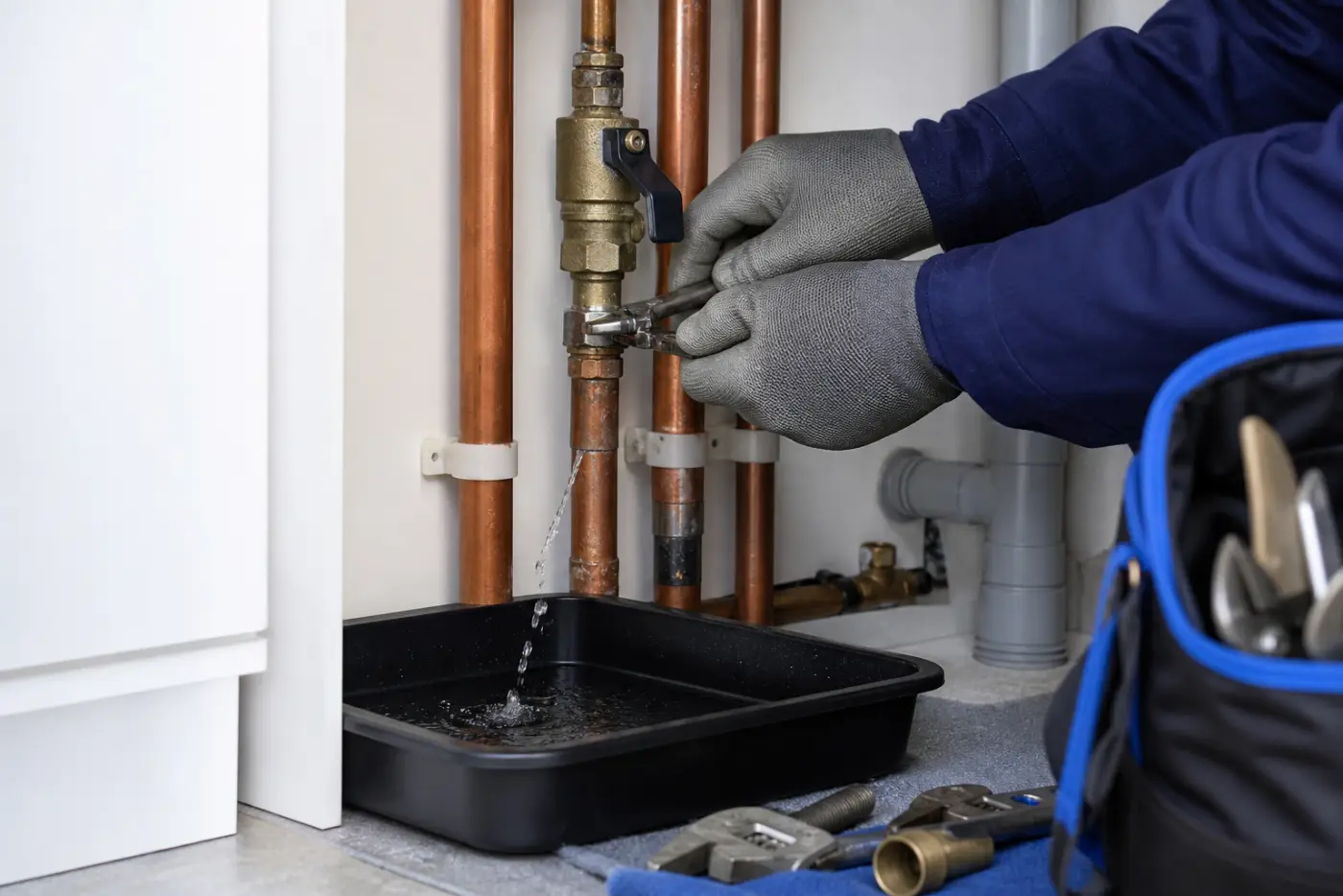
Close the internal stop valve immediately when safe. Scottish Water says it is commonly beneath a kitchen or utility sink, in a garage, near the hot-water system or where the mains enters, and normally closes clockwise. Do not force it. A flat, terrace or semi-detached home may share a supply, so alert neighbours and check whether isolation stopped their water too. Report clearly if no valve can be reached safely.
Switch off heat sources and drain remaining water
Scottish Water advises switching off the immersion heater and central-heating boiler, allowing a solid-fuel fire to die down, then opening hot and cold taps to drain remaining water. Do not touch wet or inaccessible controls. Keep containers below the burst only from a dry, stable approach. Do not restart heating or immersion equipment until the repair is complete, the system is refilled and it is safe to do so.
Use different precautions if freezing caused the problem
For a frozen pipe, Scottish Water says to close the stop valve and open cold taps, but not hot taps, because a hot-water cylinder may collapse if its pipes are frozen. Never use a direct flame or switch on a boiler or immersion heater to thaw pipework. Ice can hide a split until thawing begins, so keep the water isolated and leave uncertain cylinder or heating-system decisions to an appropriate professional.
Limit spread and alert affected people
Move people and possessions away without crossing a wet electrical area. Use buckets only beneath safely accessible pipework; do not puncture a ceiling or dismantle a pressurised fitting. In a shared building, alert the occupier below, landlord or agent, and factor where common areas or pipework may be involved. Record whether another flat, business or stair has water rather than spending time identifying the exact fitting.
- Main stop valve position and whether it closed fully.
- Rooms affected, burst location if visible and direction of water travel.
- Electricity, boiler and immersion-heater status.
- Any shared-supply, landlord, factor or neighbouring-property involvement.
Repair and safe restoration come after the leak is controlled
Keep the supply off and request help with the actions and risks recorded above. Scottish Water's pipework guide explains private, shared and network responsibilities. After repair, restore water in a controlled way and check the repaired area. Keep heating and immersion equipment off until the system is full and safe to restart, and have water-affected electrical equipment checked before reuse.
Useful Scottish references
- Scottish Water: advice on frozen or burst pipes The official household sequence for stop valves, draining, heating equipment and frozen pipes.
- Scottish Water: guide to water pipework Diagrams explaining private, shared and Scottish Water pipework responsibilities.
- Electrical Safety First: water-damaged electrics Advice on consumer units, wet equipment and professional electrical checks.